
Share Patricia Davis Hainer's obituary with others.
Invite friends and family to read the obituary and add memories.
Stay updated
We'll notify you when service details or new memories are added.
You're now following this obituary
We'll email you when there are updates.
Select your format and elements to print
IN LOVING MEMORY OF Patricia Davis Hainer
Patricia Davis
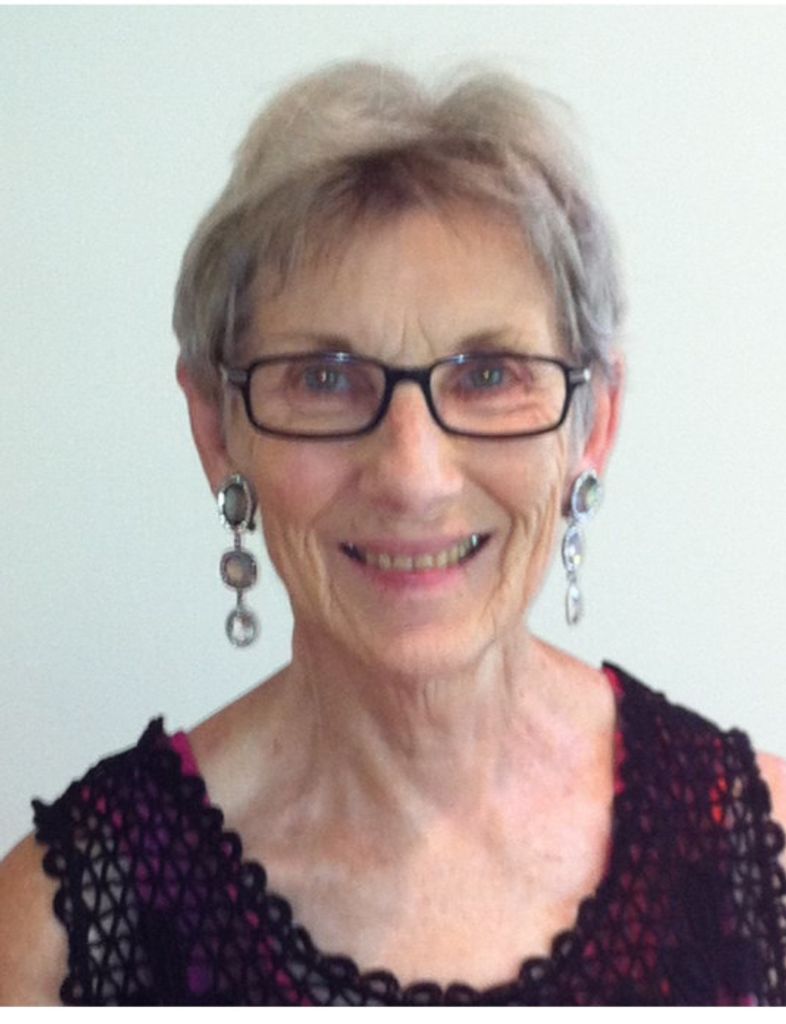
Hainer
Jul 4, 1939 — Sep 11, 2024
Norwell
Patricia Davis Hainer's Obituary
Patricia Davis Hainer, 85, passed away on September 11, 2024, at her home in Norwell, Mass., from complications of Alzheimer's disease. She was surrounded at her bedside by her husband of 51 years, Peter, her sons Sam and Raymond, and her sister, Lisa D. Orecchio.
Born in Boston on July 4, 1939, to Edmonde and Virginia Davis, Pattie — as she was known since childhood — grew up in the city's Roslindale neighborhood and attended Catholic schools, graduating in 1957 from Archbishop Cushing Central High School, in South Boston. Encouraged by a high-school art teacher who had noticed her talent for drawing, Pattie subsequently enrolled in the Massachusetts School of Art (now called MassArt) — then as now the only publicly funded independent art school in the United States — and majored in painting and printmaking, working part time to pay for her tuition and expenses.
After graduating in 1961 she continued to support her art-making with a mix of day jobs and creative gigs. She was a waitress at the Cafe Yana, a folk-music venue in Kenmore Square where she fondly remembered serving a rising star named Joan Baez. With two art school friends, she opened a pop-up boutique on Newbury Street, Pisces, designing and sewing an A-line dress — a "hit," she and others recalled — that quickly sold out. She was a cashier at the Radio Shack on Commonwealth Avenue, and she worked at Impressions, a gallery and printmaking shop on Stanhope Street. Around this time, one of her paintings was included in a juried exhibition at the annual Boston Arts Festival, on Boston Common — a recognition from her peers that she held dear till the end of her life.
Alongside her creative pursuits, Pattie became active in the Civil Rights movement in Boston. In 1965, to protest de facto segregation in the city's schools, she joined other local activists in a march from Roxbury to the Common led by Martin Luther King, Jr. — the city's "first gigantic civil rights march," the Boston Globe reported. Pattie had heard King speak before. Two years earlier, as part of a delegation of 1,200 Bostonians organized by a local chapter of the NAACP, she had traveled in August by bus to the March on Washington for Jobs and Freedom. Somehow — their bus was late — she and her seatmates squeezed onto the steps of the Lincoln Memorial and watched King deliver his "I Have a Dream" speech.
Though she continued to make art, Pattie's commitment to social justice increasingly shaped her professional path. She joined the Boston Welfare Department as a case worker, focused on Dorchester and the Columbia Point public housing development. She joined Volunteers in Service to America (VISTA), a federal program that supported community-based antipoverty programs. And in 1969, she joined the Massachusetts Welfare Rights Organization, where she met a 22-year-old community organizer named Peter Hainer who was just beginning a Ph.D. in anthropology at Brandeis University.
Two years later, Peter moved into Pattie's apartment at 870 Huntington Avenue, in a brick row house at the foot of Mission Hill.
They were both students: Peter was conducting fieldwork in Roxbury for his dissertation, and Pattie had entered a master's program in political science at Tufts University that provided grants to politically active women who couldn't otherwise afford the tuition. Peter's job as a taxi driver for the Ambassador Cab Company, and the Social Security checks given to them by Pattie's grandmother, Katherine Kane, helped make ends meet, but these were hard years. Since she only had an art degree, Tufts required Pattie to complete a year of undergraduate work in political science. One course involved using punch cards in an overbooked computer lab on the distant Medford campus, and Pattie drew the midnight-to-six shift. Peter joined her in the lab those nights, doing his anthropology reading while she worked, and afterwards, a bright spot, they'd stop for breakfast at the 24-hour Hayes-Bickford cafeteria in Somerville's Davis Square.
On July 28, 1973, Peter and Pattie were married in a ceremony that included the full cast of characters that had shaped their lives thus far: family members young and old, their welfare rights friends, their "bohemian" friends (as they fondly called each other), and Peter's fieldwork informants, who would themselves become lifelong friends.
The following spring, Pattie gave birth to a son, Sam.
When Sam was 18 months old, Pattie underwent surgery to correct the scoliosis she had lived with since adolescence. A surgical team at Boston Children's Hospital fused 13 of her vertebrae and fixed a titanium rod to her spine. She spent six weeks at Children's in halo-femoral traction, and the next six months recovering at home in a plaster body cast.
...
Fast forward a couple of decades, and Pattie is working as a staff reporter at the Patriot Ledger, covering local news and government in Norwell.
In the intervening years, she and Peter had purchased, renovated, and sold the building at 870 Huntington where they'd first lived together. They moved their family of four — which now included Raymond, born in 1980 — to Norwell, into a shingled house built in 1813 that had once been known as October Farm, a name she and Peter resurrected on a handmade sign out front. Soon after, Pattie began writing freelance articles for the Mariner, the town's weekly newspaper, eventually becoming a staff reporter. In 1988, with Peter on sabbatical from Curry College, the family decamped to a small town in the Brittany region of France, Saint-Évarzec, where Pattie, for the first time since the 1970s, began making art, filling sketchbooks with colored-pencil drawings of their rented cottage and of the flowers she cut in the garden. After returning from France, Pattie moved from the Mariner to the Ledger, a daily, filing her late-night write-ups of zoning board and school committee meetings from her home office via dial-up modem.
An article that appeared in the Ledger in January 1993 opened a new chapter in Pattie's life. In the days leading up to Martin Luther King Day, having noted the "distinctly low-key" observances in years past, she interviewed several members of Norwell's small Black community, including a retired firefighter with roots in town dating back to the 1700s, and a former selectman who told Pattie he felt the contributions of the town's Black residents had been overlooked. "This is a history that should be recognized," he said. A history teacher at the local junior high school contacted Pattie after reading her article ("For King holiday, Norwell reflects on its lack of diversity"). He'd once surveyed the town's vital records, and he thought she'd be interested to know they contained the names of slaves, and slave owners.
"Growing up in the white, working-class community of Roslindale ... and attending Catholic schools through high school," Pattie later recalled, "[I] grew up thinking that slavery was a southern institution. The sudden realization that it existed in this small suburban community in New England sparked an insatiable curiosity to know more."
Unearthing this unseen history became Pattie's life's work. For the next two decades, she documented slavery in Norwell and surrounding towns through exhaustive archival and genealogical research that quickly outgrew the Ledger, where she remained on staff. Supported by grants from the Bay State Historical League and the Massachusetts Foundation for the Humanities, she published two reports detailing the history and daily life of the community of slaves and free people of color that, beginning in the 1630s, had sprung up around the North River shipbuilding industry. From the traces she found in town offices and historical societies, she painstakingly pieced together biographies of individual slaves, many of them — Mariah, Cuffee, Flora, Prince — identified in town records only by their first name.
"The circumstances of their lives, the pain they endured, the love and affection they had for each other and the courage with which they persevered has moved me — on occasion to happiness and joy but mostly to profound sadness," Pattie wrote in the introduction to Uncommon Sufferings and Surprising Deliverances: The Black Community of Scituate-Norwell, 1628–1800. "This report is an attempt to acknowledge their presence in these two towns and their contribution to its history."
In 2000, Pattie took a hiatus from journalism after receiving a diagnosis of non-Hodgkin's lymphoma. After several months of chemotherapy and radiation treatment at Brigham and Women's Hospital, and another long recovery at home, she achieved full remission. She retired from the Ledger and devoted herself to her research. In lectures and exhibitions, she delved deeper into the local history of slavery, branching out to study almshouses and public welfare.
In retirement, Pattie was also active in town government and the local Democratic committee. An avid gardener, she volunteered at the Norwell Food Pantry, donating produce from her own garden. In 2021 she was diagnosed with Alzheimer's disease, and despite her failing memory and strength, she remained an energetic and loving presence till the end.
In addition to Peter, 77, she is survived by Sam and his wife Amy (Pelletier) Hainer, of Norwell, and by Raymond and wife Emily Weiss, and their two sons Miles and Calvin, of Brookline, who live half a mile from 870 Huntington. Pattie is also survived by her sister, Lisa D. Orecchio, brother-in-law David Orecchio, and nephews Paul Orecchio and Brian Orecchio; nieces Deborah Ziganto and Jennifer Picozzi; brother-in-law Jonathan Hainer and wife Deborah Halberstadt; and sister-in-law Margaret Hainer and nephew Gabriel Hainer Evansohn.
She also leaves behind a home filled with artwork, books, sketchbooks, lovingly assembled scrapbooks, and dozens of binders and hard drives. Her research has been cited by academic historians and inspired a documentary film, The Cuffee Origin, and her reports on slavery are now part of the archives she once scoured.
Uncommon Sufferings, her first report, closes with a passage from a book by the anthropologist and archaeological historian James Deetz, Small Things Forgotten, which takes its name from a colonial-era accounting term for miscellaneous items that have been overlooked in the inventory of a deceased person's property. As an epitaph, the words she quoted to end her own report can't be outdone:
It is terribly important that the "small things forgotten" be remembered. For in the seemingly little and insignificant things that accumulate to create a lifetime, the essence of our existence is captured. We must remember these bits and pieces, and we must use them in new and imaginative ways so that a different appreciation for what life is today, and was in the past, can be achieved.
On Saturday, October 5, visiting hours will be held from 12 to 3 pm at McNamara-Sparrell Funeral Home, 30 Central Street in Norwell, with a memorial program beginning at 2 pm. In lieu of flowers, the family asks that donations to honor Pattie's memory and her lifelong love of art be made to the Neighborhood House Charter School Foundation (thenhcs.org/support-us/), a 501(c)(3) non-profit organization that supports the high school led by Pattie's daughter-in-law, Emily. In the memo of your check, or in the comments section if you donate online, please write "High School Arts Fund. EIN # 04-3462888."
Funeral Services for Patricia Davis Hainer
Visitation

Saturday
McNamara - Sparrell Funeral Service Home (Norwell)
12:00 - 3:00 pm
Memorial Service
Saturday
McNamara - Sparrell Funeral Service Home (Norwell)
Starts at 2:00 pm
Patricia Davis Hainer's Guestbook
Visits: 71
This site is protected by reCAPTCHA and the
Google Privacy Policy and Terms of Service apply.
Service map data © OpenStreetMap contributors